
Chapter One
Born Between Worlds
Kuwait · 1980s · The Duality of Belonging
Audio only"Success is about adapting without losing your core." — family saying, recalled
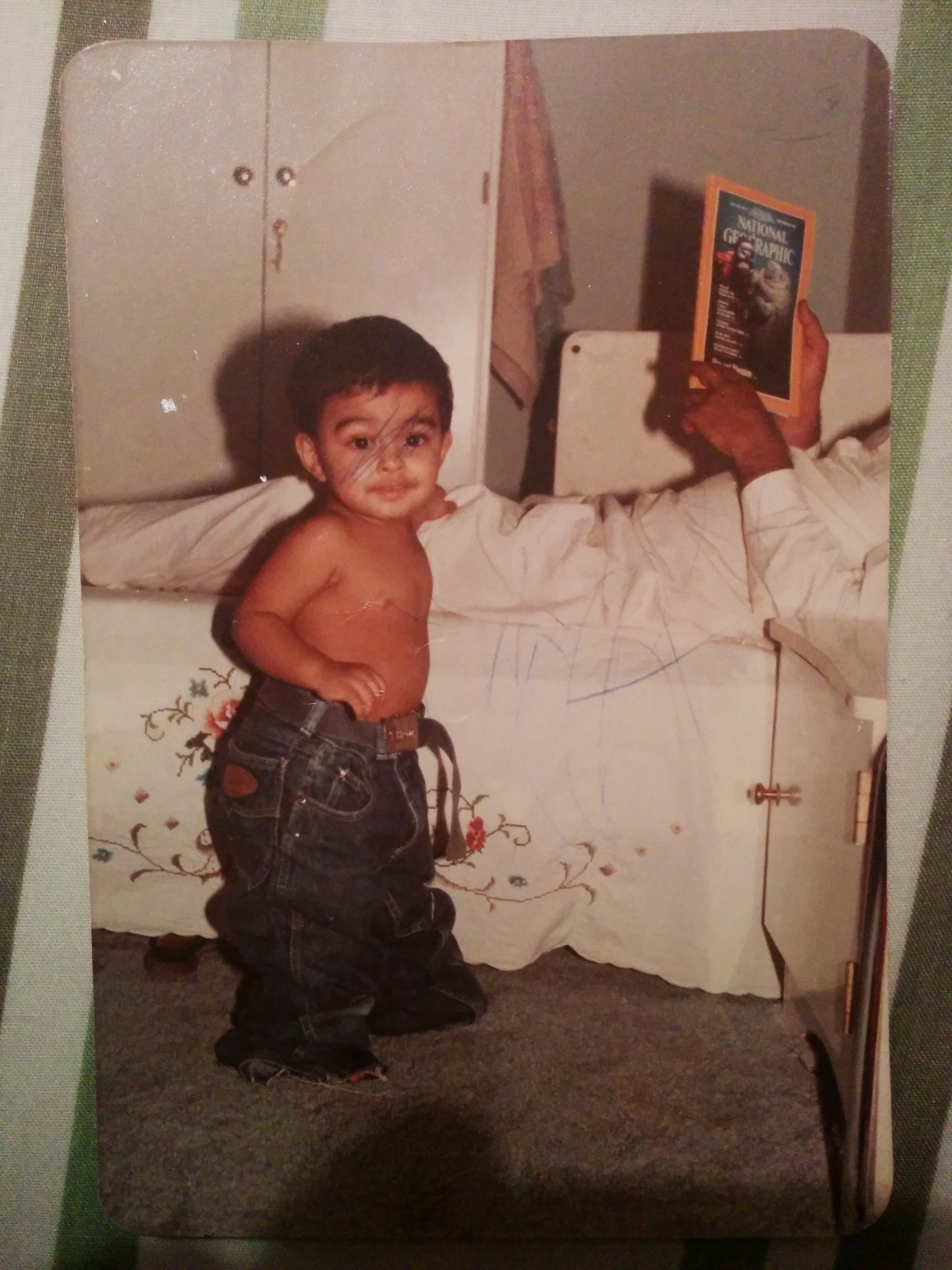
To be Pakistani in Kuwait is to occupy a space that is simultaneously full and empty. You are welcomed into the economic fabric of a nation — your labor valued, your expertise sought — but the social contract is always conditional. You are a guest in a home that you help build but can never fully own.
My family arrived in Kuwait as part of the wave of South Asian professionals who helped build the Gulf states into the modern economies they are today. My father worked with the discipline and quiet ambition that defined his generation — head down, deliver results, earn respect through consistency. My mother created a home that was unmistakably Pakistani in its warmth, its food, its values, but also unmistakably Kuwaiti in its rhythms.
I grew up switching languages mid-sentence. Arabic with friends at school, Urdu at home, English in formal settings. This was not a conscious skill — it was survival. And it was the first version of what I would later formalize as the Cultural Ecosystem Mapping Framework: the ability to read a room not just for its spoken language, but for its power distance, its risk tolerance, its unspoken rules about who gets to speak and when.
The Cricket Field as Training Ground
 Harshal Gibs .jpg)
Sport became my first laboratory for leadership. Cricket in Kuwait was not just recreation — it was community, identity, and strategy compressed into weekends. I learned to read a batting lineup the way I would later read a stakeholder map. I learned that the best captains were not the most talented players, but the ones who could adjust strategy mid-play without losing the confidence of their team.
These were not metaphors I constructed later. They were lived experiences that became reflexes. When I eventually sat across the table from Huawei executives negotiating procurement contracts worth tens of millions, the same instincts applied: read the field, adjust the approach, hold your nerve, respect the opposition.
The Invisible Curriculum
What no school teaches you — and what being an expatriate child in the Gulf forces you to learn — is the art of identity preservation under change. You adapt, but you do not dissolve. You learn the local customs, but you do not abandon your own. This is a tension that most people experience occasionally. For us, it was daily life.
That tension, I now understand, is the engine of my entire professional philosophy. The Identity Preservation Under Change Framework did not emerge from a consulting engagement. It emerged from watching my mother maintain Ramadan traditions in a country where our version of Islam was subtly different from the local practice. It emerged from learning that you can respect a system without surrendering to it.